Thursday, June 26, 2014

She Wears the Pants (But Doesn't Want To)

She Wears The Pants

Here’s an interesting letter addressed to advice columnist, Harriette Cole:

Dear Harriette,

I am on cloud nine thinking about my future wedding, and I have already mapped out my wedding day. My fiancĂ© thinks I am too controlling because I picked out my own engagement ring, but I still afforded him the opportunity to propose to me when he thought the time was right. I like being in charge, but I worry that my independence may cause some trouble in my future household. How do I let my husband “wear the pants” while I still run our relationship?

—Have My Cake and Eat It Too, Syracuse, N.Y.

Harriette sees the writing on the wall and tells the writer:

Your perspective right now of wanting to be in control is not the healthiest way to enter into a marriage. You can bet that your husband will not appreciate your desire to run everything just as you wouldn’t appreciate him wanting the same role.

Ms. Cole is correct in stating that control is unhealthy — it surely dooms any relationship.  Unfortunately, she misses the writer’s key point: Have My Cake and Eat it Too wants her husband to “wear the pants.” But it’s obvious that she doesn’t believe he can — because at the end of the day she still feels the need to “run the relationship.”

Sadly, if Cake maintains the status quo she will only grow less and less attracted to her increasingly weak husband and more and more resentful. Ironically, modern men only become accommodating and passive because they want their wives to be happy.

If this man really wants his future wife to be happy, he needs to step up and fill the three Sigma roles (Protector, Provider, Presider). Only then will her desire to control the relationship evaporate. When a Sigma Male “wears the pants” it doesn’t effect his wife’s “independence” in the least. She can still do whatever she wants but will feel an increased sense of security.

The sad truth is this: if this man doesn’t learn to display Sigma behavior, his marriage will be unhappy at best and most likely end in frustration.

——-

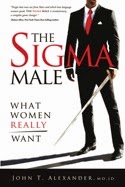
Dr. John Alexander is an expert on marriage relationships and the author of The Sigma Male: What Women Really Want. To learn more about the Sigma Roles in marriage, visit his website, subscribe to his blog, “like” his page on Facebook, and follow him on Twitter.

Wednesday, June 25, 2014

Pack Mule or Stallion: Which Are You?

Mule train

On a regular basis, readers of The Sigma Male share new analogies with me that describe what they want in a partner.

Sue, an energetic 50-something, is 9 years into a happy second marriage. Yesterday she told me:

I don’t want a pack mule; I want a stallion.

Before she could be accused of wanting a stereotypical Alpha Male, Sue added a powerful clarification:

I want a man who can lead me where I want to go.

The differences between a pack mule and a stallion may seem obvious, but a few are worth analyzing in more detail.

Both a pack mule and a stallion are built to carry significant loads, but while a pack mule labors under whatever odds and ends are tossed on his back, a stallion carries what matters most. 

And although both may be headed down the same path, a pack mule is content to plod on, head on, following his master. In contrast, after understanding where his rider wants to go, a prize stallion sets the pace. He takes the rein and leads out with strength and confidence.

A rider doesn’t really need the stallion; she has legs of her own. But the stallion can make her life easier. To make that happen, she must choose to ride and he must choose to carry her.

And even after a stallion agrees to carry his passenger, she can’t force him to move in a direction he doesn’t want to go. But when he respects her their coupled strength allows them to move forward in a mutually beneficial partnership.  

In the end, a man can eat dust as a pack mule or lead out as a stallion. The choice is his.

Thanks for the excellent analogy, Sue. You nailed the Sigma Philosophy in two sentences. I have no doubt your marriage will continue to be a great one.

—————

Dr. John Alexander is an expert on marriage relationships and the author of The Sigma Male: What Women Really Want. To learn more about the Sigma Roles in marriage, visit his website, subscribe to his blog, “like” his page on Facebook, and follow him on Twitter.

Friday, June 20, 2014

Real Life Sigma Male: Brad Soden

Do Sigma Males really exist? Check out this example of Sigma behavior on NBC’S Today Show. Liz Soden was paralyzed after a traffic accident, her disability became extremely limiting on a camping trip, even though the family had rented a “handicap cabin.” Liz described the frustration of being left behind as the family ran for a closer look at a herd of elk:

I tried to follow but my chair got stuck and I started crying, I have never felt to helpless and left out in my whole life. My husband and kids returned and helped me so I was no longer stuck but at the moment my wonderful husband promised me he would make me something so that I would never have to worry about getting stuck again.

After investing a lot of time, effort, and money, Soden created the “Tankchair,” an off-road wheelchair with tracks that can handle any terrain. Later, he added the Speedster, a “fast, agile and sporty daily driver."

“Are you amazed at what you were able to create?” asked interviewer Matt Lauer.

Without a second thought, Soden shifted attention from himself to what matters most to him: “When you [my wife] her to cry, I’m motivated; I’ll make it happen.

Says his wife:

The best part about the Tankchairs and Speedsters is that I am no longer invisible. Before people would not look at me because they thought it was rude to stare at someone in a wheelchair, now I feel like a prom queen. Words can not begin to describe the feeling I get when I am in one of these chairs, the freedom and independence is truly remarkable. I don’t know where I would be right now if I did not have my wonderful husband by my side.

Kudos to Brad Soden for demonstrating how proactive protection — not just passive sympathy — makes a real difference in a relationship. His example of masculine sensitivity is what being a Sigma Male is all about.

—————

Dr. John Alexander is an expert on marriage relationships and the author of The Sigma Male: What Women Really Want. To learn more about the Sigma Roles in marriage, visit his website, subscribe to his blog, “like” his page on Facebook, and follow him on Twitter.

Thursday, June 19, 2014

5 Life-Changing Books To Read Today

Man Reading

Reading is a big part of my life. Many of the best books I’ve encountered were recommended by others, so I’m always intrigued when I find a new list. I discovered another this morning titled 28 Life-Changing Books To Read Today (posted by Buffer):

I don’t completely agree with some of Buffer’s choices, but taste in books is not universal. Having said that, here’s my list of 5 books you should add to your reading list:


Mastery

Mastery by Robert Greene

Will cause you to question whether you are spending your time mastering the skills that will get you where you want to be— and bring you the most satisfaction in life.


War of Art

The War of Art by Steven Pressfield

To be read over and over, especially when you feel stuck creatively.


Mindset

Mindset: The New Psychology of Success by Carol Dweck

Great when read in tandem with Mastery, since having a “fixed” mindset keeps you from believing you can develop your intelligence and talents.


The Four Agreements

The Four Agreements: a Practical Guide to Personal Freedom by Don Miguel Ruiz

Wise words to apply to your for personal relationships: Be impeccable with your word. Don't take anything personally. Don't make assumptions. Always do your best. 


The Sigma Male

The Sigma Male: What Women Really Want by John Alexander

Will change your life — not just your relationship — in more ways than one.

What books would you add to this list and why? Be sure to leave a comment below!

—————

Dr. John Alexander is an expert on marriage relationships and the author of The Sigma Male: What Women Really Want. To learn more about the Sigma Roles in marriage, visit his website, subscribe to his blog, “like” his page on Facebook, and follow him on Twitter.

Wednesday, June 18, 2014

What Defines a Man's Man?

On a lighter note, take a look at the following Buzzfeed video:


Regular readers recognize that a man’s man successfully fills the three Sigma Roles: Protector, Provider, and Presider.

I don’t believe a man needs to be an athletic, hairy, whisky-pounding auto mechanic who ogles women, but I also think a woman would be hard-pressed to feel completely safe next to a guy who shrieks at the sight of a bug and can’t manage to get the lid off a pickle jar.

What stereotypes of manhood do you think men could reject without stepping away for Protecting, Providing, and Presiding?

—————

Dr. John Alexander is an expert on marriage relationships and the author of The Sigma Male: What Women Really Want. To learn more about the Sigma Roles in marriage, visit his website, subscribe to his blog, “like” his page on Facebook, and follow him on Twitter.

Tuesday, June 17, 2014

A Couple's Guide to Arguing

Couple arguing cartoon

Occasionally I reflect on the stories I’ve heard about couples who never argue. My maternal grandfather was a lifetime member of that club, as my mother and grandmother confirm that he never raised his voice or had a cross word for anyone — especially his wife. To obtain this level of sainthood seems unfathomable and in direct conflict with the advice of David and Sally of the Coupled With blog. Says Sally:

I told a close friend the other day that you should worry if you never argue because it’s a giveaway that you’re not in love. You argue with the people you care about.

Wow! Fortunately, she gives a caveat in the next line:

However, there is a right way to argue and a wrong way to argue.

Most people define arguing as angry contention, usually consisting of loud, unkind exchanges. To be clear, that type of interaction is never productive. But all couples, including by grandfather, have disagreements (a much preferable word).

David offers four rules to keep in mind during a disagreement:

  1. No personal attacks, name calling, or psychological assault. This leads to ugly, offensive exchanges far beyond the problem of who does the dishes.
  2. Leave the past in the past. If you talk about what happened yesterday, last year, or ten years ago in response to the moral quandary “Do we watch Girls or True Detective tonight?” you will never get to watch anything because you’ll fall down a rabbit hole of regret.
  3. Stop accusing the other person. This just puts her on the defensive and leads to childishness like “No I didn’t” or “But you started it.”
  4. Instead of the above distractions, focus on the immediate conflict and consider her side as much as yours. “I know you tried to do _____, but it came across as _______ and I was trying to ______.” That way, you acknowledge the other person while stating how you feel and what you need.

This is excellent advice, although David and Sally admit that it’s easier said than done. Learning how to handle disagreements takes practice:

  • Each of you knows which tactics make you go ballistic. Agree to avoid pressing those buttons under any circumstances.
  • Admit fault when you’ve broken the rules, apologize, and negotiate. This will help you find solutions together and move on to something else.
  • Not winning doesn’t mean losing, but it does sometimes mean only getting part of what you want. You should both back down some and both get some of your demands met.
  • That said, someone who is wronged shouldn’t back down about important emotional needs, and one partner should not be the one backing down all the time.

I wholeheartedly support the concept of “not winning doesn’t mean losing,” but David and Sally lose me at the end. Backing down, being wronged, and getting demands met indicate a level of stubborn contention that is completely unnecessary. “Backing down” should not be seen as losing any more than "getting demands met" should be seen as winning.

When your primary goal is the protection and emotional security of your partner, that desire readily supersedes the need to be right. It pushes your focus outward instead of inward. Some might argue that a spouse might take advantage of the man who doesn’t feel the need to be right. My experience as a relationship coach proves otherwise. When your spouse knows you care more about her wellbeing than you care about being right, the frequency of contention evaporates and disagreements are quickly resolved and forgotten.

On occasion, my clients tell me I oversimplify complex issues, an accusation that I smilingly accept. However, I am the first to admit that having the right tool makes a job quicker and easier. Ever tried to unscrew a carriage bolt with a pair of needle-nose pliers? I much prefer a nice Crescent wrench. Adding tools to your repertoire is wise — which is why I continue to share good content with you as I encounter it.

But each of us has a favorite, utilitarian tool that serves us well in a pinch. 

Mine is the Sigma Philosophy.

Note: Unstuck has produced an excellent tip card on A Couple’s Guide to Arguing to print, pin, and share.

—————

Dr. John Alexander is an expert on marriage relationships and the author of The Sigma Male: What Women Really Want. To learn more about the Sigma Roles in marriage, visit his website, subscribe to his blog, “like” his page on Facebook, and follow him on Twitter.


Monday, June 16, 2014

Managing Stress: The Key to Happy Marriage?

Stress

In a recent post on The Good Men Project, Dr. Jed Diamond presents the argument that men may hold the key to a happy marriage.

He cites a recent study from the University of Chicago that suggests that a woman’s poor health doesn’t affect the quality of the marriage for her husband, whereas a husband’s poor health leads to more conflict in the relationship. The study also finds that a man’s positive expressivity (being gentle, helpful, kind, and understanding) results in less marital conflict while a woman’s positive expressivity has no association with her husband’s reports of conflict.

According to Diamond, this occurs because men are more sensitive to stress, a conclusion supported by marriage expert Dr. John Gottman:

Gottman traces men’s greater reactivity to stress in the relationship to our evolutionary past. “Males whose adrenaline kicked in quite readily who did not calm down so easily were more likely to survive and procreate.”

Gottman goes on to say,"to this day, the male cardiovascular system remains more reactive than the female and slower to recover from stress.” For example, if a man and woman suddenly hear a very loud, brief sound, like a blowout, most likely his heart will beat faster than hers and stay accelerated longer. The same goes for their blood pressure. This helps account for the fact, Gottman believes, that men tend to withdraw and avoid conflict in a relationship. “It’s a biological fact,” says Gottman. “Men are more easily overwhelmed by marital conflict than are their wives.” 

Diamond concludes men distance themselves from their wives because they become more easily “flooded” — overwhelmed — by conflict in marriage. Because of this, Diamond encourages men to learn how to reduce stress so they can more readily share their emotions “without criticism or blame.” Diamond’s key to marriage happiness? “Neutralizing stress."

I agree with his assertions to a point: men can be more sensitive to stress than women — or at least they manage stress differently. But believing stress reduction leads to a happier marriage smacks of rationalization, much like claiming you’ll be happier after you make more money, enjoy more vacations, or live in a bigger, cleaner, more organized house.

I believe men can manage stress because evolution made them physically able to do so. In the past, men had the luxury of disengaging from their wives during stressful situations because there was no societal expectation for male sensitivity or emotional sharing. But today, men are expected to continue communicating and emoting positivity  — regardless their level of stress. Modern men try to communicate when stressed, but in the form of whining and complaining that I’ve described here, here, and here. This method of communication only serves to make them appear incompetent and weak.

Don’t get me wrong, eliminating stress is a good thing, but it isn’t the magic bullet for resolving marital problems. In reality, how a man reacts to stress proves his evolutionary strength — or lack thereof. When a man can effectively shoulder problems — whether simple or weighty — and still perform his duties, his wife more readily appreciates him, admires him, and ultimately desires him. In that sense, men really do hold the key to a happy marriage.

—————

Dr. John Alexander is an expert on marriage relationships and the author of The Sigma Male: What Women Really Want. To learn more about the Sigma Roles in marriage, visit his website, subscribe to his blog, “like” his page on Facebook, and follow him on Twitter.