Wednesday, June 18, 2014

What Defines a Man's Man?

On a lighter note, take a look at the following Buzzfeed video:


Regular readers recognize that a man’s man successfully fills the three Sigma Roles: Protector, Provider, and Presider.

I don’t believe a man needs to be an athletic, hairy, whisky-pounding auto mechanic who ogles women, but I also think a woman would be hard-pressed to feel completely safe next to a guy who shrieks at the sight of a bug and can’t manage to get the lid off a pickle jar.

What stereotypes of manhood do you think men could reject without stepping away for Protecting, Providing, and Presiding?

—————

Dr. John Alexander is an expert on marriage relationships and the author of The Sigma Male: What Women Really Want. To learn more about the Sigma Roles in marriage, visit his website, subscribe to his blog, “like” his page on Facebook, and follow him on Twitter.

Tuesday, June 17, 2014

A Couple's Guide to Arguing

Couple arguing cartoon

Occasionally I reflect on the stories I’ve heard about couples who never argue. My maternal grandfather was a lifetime member of that club, as my mother and grandmother confirm that he never raised his voice or had a cross word for anyone — especially his wife. To obtain this level of sainthood seems unfathomable and in direct conflict with the advice of David and Sally of the Coupled With blog. Says Sally:

I told a close friend the other day that you should worry if you never argue because it’s a giveaway that you’re not in love. You argue with the people you care about.

Wow! Fortunately, she gives a caveat in the next line:

However, there is a right way to argue and a wrong way to argue.

Most people define arguing as angry contention, usually consisting of loud, unkind exchanges. To be clear, that type of interaction is never productive. But all couples, including by grandfather, have disagreements (a much preferable word).

David offers four rules to keep in mind during a disagreement:

  1. No personal attacks, name calling, or psychological assault. This leads to ugly, offensive exchanges far beyond the problem of who does the dishes.
  2. Leave the past in the past. If you talk about what happened yesterday, last year, or ten years ago in response to the moral quandary “Do we watch Girls or True Detective tonight?” you will never get to watch anything because you’ll fall down a rabbit hole of regret.
  3. Stop accusing the other person. This just puts her on the defensive and leads to childishness like “No I didn’t” or “But you started it.”
  4. Instead of the above distractions, focus on the immediate conflict and consider her side as much as yours. “I know you tried to do _____, but it came across as _______ and I was trying to ______.” That way, you acknowledge the other person while stating how you feel and what you need.

This is excellent advice, although David and Sally admit that it’s easier said than done. Learning how to handle disagreements takes practice:

  • Each of you knows which tactics make you go ballistic. Agree to avoid pressing those buttons under any circumstances.
  • Admit fault when you’ve broken the rules, apologize, and negotiate. This will help you find solutions together and move on to something else.
  • Not winning doesn’t mean losing, but it does sometimes mean only getting part of what you want. You should both back down some and both get some of your demands met.
  • That said, someone who is wronged shouldn’t back down about important emotional needs, and one partner should not be the one backing down all the time.

I wholeheartedly support the concept of “not winning doesn’t mean losing,” but David and Sally lose me at the end. Backing down, being wronged, and getting demands met indicate a level of stubborn contention that is completely unnecessary. “Backing down” should not be seen as losing any more than "getting demands met" should be seen as winning.

When your primary goal is the protection and emotional security of your partner, that desire readily supersedes the need to be right. It pushes your focus outward instead of inward. Some might argue that a spouse might take advantage of the man who doesn’t feel the need to be right. My experience as a relationship coach proves otherwise. When your spouse knows you care more about her wellbeing than you care about being right, the frequency of contention evaporates and disagreements are quickly resolved and forgotten.

On occasion, my clients tell me I oversimplify complex issues, an accusation that I smilingly accept. However, I am the first to admit that having the right tool makes a job quicker and easier. Ever tried to unscrew a carriage bolt with a pair of needle-nose pliers? I much prefer a nice Crescent wrench. Adding tools to your repertoire is wise — which is why I continue to share good content with you as I encounter it.

But each of us has a favorite, utilitarian tool that serves us well in a pinch. 

Mine is the Sigma Philosophy.

Note: Unstuck has produced an excellent tip card on A Couple’s Guide to Arguing to print, pin, and share.

—————

Dr. John Alexander is an expert on marriage relationships and the author of The Sigma Male: What Women Really Want. To learn more about the Sigma Roles in marriage, visit his website, subscribe to his blog, “like” his page on Facebook, and follow him on Twitter.


Monday, June 16, 2014

Managing Stress: The Key to Happy Marriage?

Stress

In a recent post on The Good Men Project, Dr. Jed Diamond presents the argument that men may hold the key to a happy marriage.

He cites a recent study from the University of Chicago that suggests that a woman’s poor health doesn’t affect the quality of the marriage for her husband, whereas a husband’s poor health leads to more conflict in the relationship. The study also finds that a man’s positive expressivity (being gentle, helpful, kind, and understanding) results in less marital conflict while a woman’s positive expressivity has no association with her husband’s reports of conflict.

According to Diamond, this occurs because men are more sensitive to stress, a conclusion supported by marriage expert Dr. John Gottman:

Gottman traces men’s greater reactivity to stress in the relationship to our evolutionary past. “Males whose adrenaline kicked in quite readily who did not calm down so easily were more likely to survive and procreate.”

Gottman goes on to say,"to this day, the male cardiovascular system remains more reactive than the female and slower to recover from stress.” For example, if a man and woman suddenly hear a very loud, brief sound, like a blowout, most likely his heart will beat faster than hers and stay accelerated longer. The same goes for their blood pressure. This helps account for the fact, Gottman believes, that men tend to withdraw and avoid conflict in a relationship. “It’s a biological fact,” says Gottman. “Men are more easily overwhelmed by marital conflict than are their wives.” 

Diamond concludes men distance themselves from their wives because they become more easily “flooded” — overwhelmed — by conflict in marriage. Because of this, Diamond encourages men to learn how to reduce stress so they can more readily share their emotions “without criticism or blame.” Diamond’s key to marriage happiness? “Neutralizing stress."

I agree with his assertions to a point: men can be more sensitive to stress than women — or at least they manage stress differently. But believing stress reduction leads to a happier marriage smacks of rationalization, much like claiming you’ll be happier after you make more money, enjoy more vacations, or live in a bigger, cleaner, more organized house.

I believe men can manage stress because evolution made them physically able to do so. In the past, men had the luxury of disengaging from their wives during stressful situations because there was no societal expectation for male sensitivity or emotional sharing. But today, men are expected to continue communicating and emoting positivity  — regardless their level of stress. Modern men try to communicate when stressed, but in the form of whining and complaining that I’ve described here, here, and here. This method of communication only serves to make them appear incompetent and weak.

Don’t get me wrong, eliminating stress is a good thing, but it isn’t the magic bullet for resolving marital problems. In reality, how a man reacts to stress proves his evolutionary strength — or lack thereof. When a man can effectively shoulder problems — whether simple or weighty — and still perform his duties, his wife more readily appreciates him, admires him, and ultimately desires him. In that sense, men really do hold the key to a happy marriage.

—————

Dr. John Alexander is an expert on marriage relationships and the author of The Sigma Male: What Women Really Want. To learn more about the Sigma Roles in marriage, visit his website, subscribe to his blog, “like” his page on Facebook, and follow him on Twitter.

Friday, June 13, 2014

Men's Complaint #10: My Spouse's Job is her Top Priority

Woman ignoring man

Over the next 10 days, I’ll be analyzing the Top 10 Complaints From Unhappy Husbands, originally posted by Redbook.

Complaint #10: My Spouse's Job is her Top Priority

Matt, married 8 months, complains:

My wife is a teacher and brings a lot of work home with her — planning lessons and thinking of ways to help her students — but she neglects things that are happening at home. It makes our marriage feel one-sided. I’ve even helped her grade papers and create projects and presentations in an effort to be together. I understand that a demanding job requires more than 40 hours per week. But the project will end, the students will graduate, the client will outgrow your services. Your marriage is until death do you part.

Redbook’s expert says:

Being passionate about and invested in your career is a good thing, but like much else, it’s a question of balance. You may not suddenly be able to give up working from home or checking in with your boss via email, but you can set some basic guidelines that distinguish between personal and professional time. That might mean agreeing to after-hours tasks only every other day, or turning off your email alerts after 9 p.m. so you and your husband can give each other your undivided attention.

The Sigma Male says:

The expert gives good advice for this complaint; however, Matt's wife’s focus on her work indicates she is most likely experiencing stress, worry, or fear about her job — she is under attack from a “dragon.” Matt has made a good attempt to "slay dragons" by helping grade papers and create projects, but like many men he has tried to help his wife before fully understanding the actual cause of her stress. Paying closer attention to what she says in connection to her work will give him clues about how he can slay the real dragon.

What is the real, underlying cause of her anxiety?

  • Is Matt working? (she may be feeling the weight of being the sole provider)
  • Is the couple experiencing financial strain? (she may have concern that losing her job might have disastrous consequences)
  • Does she have difficult students or parents? (she may worry that failing to always be prepared might result in uncomfortable confrontations)
  • Does she have a problem with a supervisor or co-worker (she may be stressed about job performance or work environment)
  • Is Matt taking responsibility for family planning, i.e. goal setting, scheduling, retirement planning, etc. (she may feel the fear of an unknown future)

These are only a few of the possible reasons his wife may seem more committed to her job than to their relationship. Simply assigning the problem to the inability to balance her life is unfair and most likely incorrect. Even tightly wound type-A personalities can let go of overwhelming work loads when they feel the total security that a dragonslaying husband can provide.

Taking the time to focus on “dragon recognition” — to understand the exact cause of his wife’s worry and concern — is the first step in resolving Matt's complaint. Actually taking care of the appropriate “dragon” for his wife will allow her the freedom to pay attention to “things that are happening at home."

----------

Dr. John Alexander is an expert on marriage relationships and the author of The Sigma Male: What Women Really Want. To learn more about the Sigma Roles in marriage, visit his website, subscribe to his blog, “like” his page on Facebook, and follow him on Twitter.

Men have been indoctrinated in sensitivity over the last several decades, but in addition to becoming more sensitive, they have also been emasculated. Women don’t want sensitive men who are easily hurt and then pout or mope. They do want men who are sensitive but sensitive to them and their needs.

Thursday, June 12, 2014

Men's Complaint #9: Emotional Support is a One-Way Street

Man pouting

Over the next 10 days, I’ll be analyzing the Top 10 Complaints From Unhappy Husbands, originally posted by Redbook.

Complaint #9: Emotional Support is a One-Way Street

Joseph, married 5 years, complains:

Men today are expected to be in tune with their wives emotionally, and to express their own emotions better. But when the stressors of marriage hit, my wife has a tendency to turn inward and expect me to take care of her. I wish that she acknowledged that I, too, am stressed, grieving, or scared. It’s taxing to be the primary supporter, and sad to me when I have to turn to friends or family for empathy I should be able to get at home.

Redbook’s expert says:

It’s human nature to occasionally get so wrapped up in your own issues that it’s difficult to see someone else's perspective. “When we protect ourselves, we feel like we are the only one who feel a certain way,” says Thompson. “But once you sit down together and start looking at yourselves and how you’ve been impacted, most partners realize they feel the exact same way.” Voice your feelings of isolation before the next crisis comes up so you have a plan in place for when things get tough, like agreeing to take a few hours for yourself, then sitting down for a cup of coffee and a heart-to-heart.

The Sigma Male says:

Good insight from the expert, but she misses the most crucial truth of emotional communication: how you communicate is more important than what you communicate. In other words, when sharing feelings with your wife, what message do you actually share?

Men have been indoctrinated in sensitivity over the last several decades, but in addition to becoming more sensitive, they have also been emasculated. Women don’t want sensitive men who are easily hurt and then pout or mope. They do want men who are sensitive but sensitive to them and their needs. (The Sigma Male: What Women Really Want, p. 137)

It’s not a question of whether or not a man has emotions or feels pain — he does! What’s more important is how he acts when he feels that pain. Acknowledging pain is fine, but after admitting his discomfort, does Joseph whine and complain or does he put his chin up and shoulder the burden?

I’m stressed/tired/hurt and I need to be comforted (I’m a baby) or I’m stressed/tired/hurt, but I’ll work through it (I’m a man).

Sure it’s hard to be a primary supporter, but that’s a man’s responsibility. A woman has every right to expect her husband to take care of her. If she didn’t think he was up to the task, she wouldn’t marry him in the first place.

I guarantee Joseph’s wife recognizes “turning to friends or family for empathy” for what it is: a need to complain and commiserate. Her reaction to his actions could best be described by this strong woman:

When someone seems more childish than manly, it’s not a turn-on. (The Sigma Male: What Women Really Want, p. 56)

Always remember: men do feel pain, but a real man doesn’t let that pain keep him from doing his duty. And the more he shoulders that burden without complaint, the stronger and more attractive he becomes in his wife’s eyes.

----------

Dr. John Alexander is an expert on marriage relationships and the author of The Sigma Male: What Women Really Want. To learn more about the Sigma Roles in marriage, visit his website, subscribe to his blog, “like” his page on Facebook, and follow him on Twitter.

Men have been indoctrinated in sensitivity over the last several decades, but in addition to becoming more sensitive, they have also been emasculated. Women don’t want sensitive men who are easily hurt and then pout or mope. They do want men who are sensitive but sensitive to them and their needs.

Wednesday, June 11, 2014

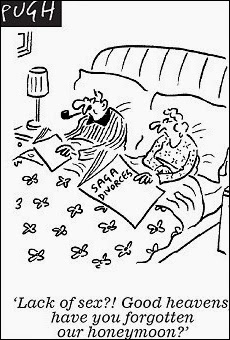
Men's Complaint #8: Lack of Intimacy

Lack of Sex

Over the next 10 days, I’ll be analyzing the Top 10 Complaints From Unhappy Husbands, originally posted by Redbook.

Complaint #8: Lack of Intimacy

Mike, married 18 years, complains:

I care for my wife, but there is absolutely no intimacy in my marriage, and there hasn’t been for five years. It’s become a platonic arrangement, which she doesn’t seem to feel is a problem. We’ve discussed it many times, and in her mmd, there’s nothing wrong with a nonsexual relationship. So she’s not interested, and I’m certainly not going to force myself on her. There’s no turn-on for me if both people aren’t into it, but I wish she’d be open to the possibility again.

Redbook’s expert says:

Both you and your husband deserve equal say in your marriage, so it shouldn’t be up to one person to determine your sexual state as a couple. That’s partially because far more often than not, lack of sex is the symptom — not the problem. “When you get into a pattern for a really long time, it can be painful and difficult to change those habits,” says Thompson. If you’re dealing with a chasm this wide, it’s worth considering couples counseling.

The Sigma Male says:

Clarification: men consistently interchange the words "intimacy" and "sex," so at its core, this complaint is a repeat of #5.

As usual, the expert gets it partly right, but because she doesn’t recognize the real problem, she bails out and refers the couple to counseling.

Mike already has an equal say in determining the frequency of sex in his marriage. While his wife expresses her disinterest in sex verbally, experience dictates that Mike has been doing the same behaviorally: how a man acts always dictates his wife’s level of desire. Any couple who thinks the frequency of sex is up for discussion (“equal say”) is sorely mistaken. Why? Because men and women approach the topic of sex differently.

Because a Modern Man views his wife as an equal, he believes her perception of sex is the same as his. Nothing could be further from the truth. 

By simply recognizing the anatomical differences between men and women, it should be obvious sexual intercourse requires a woman to physically submit to a man. A man “gives” and a woman “receives.” In essence, a man dominates and a woman submits. Modern Men don’t recognize the significance of submission during sex. Modern Women do, which is why Modern Men don’t get much sex. 

Envision how difficult it is for your wife to willingly submit to you inside the bedroom if outside of the bedroom:

  • She believes she is stronger than you because you don’t protect her.
  • She believes she is smarter than you because you just don’t get it.
  • She doesn’t respect you because you whine or pout. 
  • She doesn’t desire you because you seem weak.
  • She believes she is more dominant than you because she controls the sex. 
  • She can’t follow you because you don’t know how to lead. (The Sigma Male: What Women Really Want, p. 137)

For a woman to desire sex with her husband she must first find him desirable, which only occurs after she sees him as a real man — a man who is able to deliver on each the three Sigma Roles: Protector, Provider, and Presider. If we were to dig into the history of Mike’s marriage, we would discover that the frequency of sex diminished as he failed to fill each of these positive, dominant roles.

The answer to Mike’s complaint is easy: If he wants more sex, he needs to become a Sigma Male. 

----------

Dr. John Alexander is an expert on marriage relationships and the author of The Sigma Male: What Women Really Want. To learn more about the Sigma Roles in marriage, visit his website, subscribe to his blog, “like” his page on Facebook, and follow him on Twitter.

Tuesday, June 10, 2014

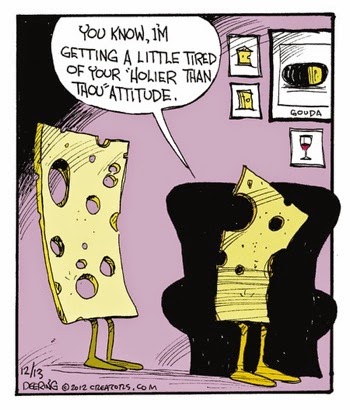
Men's Complaint #7: My Spouse's Belief System Has Changed

Holier than thou

Over the next 10 days, I’ll be analyzing the Top 10 Complaints From Unhappy Husbands, originally posted by Redbook.

Complaint #7: My Spouse's Belief System Has Changed

Ken, married 12 years, complains:

My wife became increasingly religious after we got married, and she now has a very high standard of what being a ‘good enough’ Christian is. I try to do all of those things for her, but it’s never enough. I feel cut off emotionally and turned off sexually because I don’t think I can ever live up to her expectations. How can you act like you love someone when they don’t hold you in enough respect to consider you an equal?

Redbook’s expert says:

If one person’s faith is diverging from the other’s beliefs, make a joint effort to stay on the same page—or at least close chapters—as much as possible. “If you feel like his spiritual efforts aren’t good enough, you need to be honest with yourself and your husband,” says Thompson. Figure out what he can do to connect with you spiritually and otherwise, and consider enlisting the help of your religious leader, who’s likely dealt with issues like this before.

The Sigma Male says:

The expert focuses on the first aspect of Ken’s complaint (religious differences) and completely ignores the most pertinent information: his failure to live up to his wife's expectations and her lack of respect for him.

Based on my experience, Ken’s wife’s loss of respect has less to do with “being a 'good enough’ Christian" and more to do with Gender Role Reversal:

Sadly, once a Modern Man becomes...passive..., he realizes – consciously or subconsciously – his wife has lost respect for him. He recognizes he cannot lead his wife... To make up for her lost respect, he tries to micromanage other areas of their marriage in an attempt to convince himself – and his wife – he is still “The Man.”

When a husband acts this way, he becomes the most despised type of man: an impotent chauvinist who believes he is superior to his wife but has nothing but anger to back it up.

As he becomes increasingly mean and passive-aggressive, his actions backfire. The more dictatorial he is, the more vulnerable and wounded his wife becomes. This reduces her sexual desire even further, leading her to avoid sex even more. Eventually she has difficulty even partially submitting to her husband’s advances. Respect is gone; admiration is gone; love is gone. The cycle worsens with each passing year.(The Sigma Male: What Women Really Want, p. 137)

Many couples share differing religious beliefs and are still happy, even when their beliefs changed after marriage. While a woman may appreciate her husband’s moral fortitude, true respect is granted when he fills his roles as a man.

----------

Dr. John Alexander is an expert on marriage relationships and the author of The Sigma Male: What Women Really Want. To learn more about the Sigma Roles in marriage, visit his website, subscribe to his blog, “like” his page on Facebook, and follow him on Twitter.